High-Performance Master Cylinder Clutch for Mahindra TUV 300—JCBL India
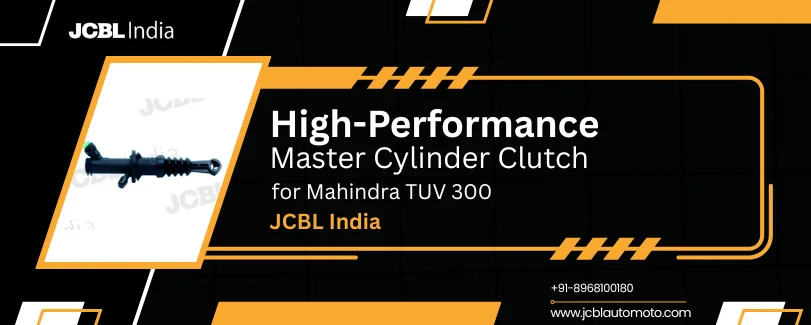
A Master Cylinder Clutch for the Mahindra TUV 300 is a hydraulic clutch component that generates and transfers hydraulic pressure from the clutch pedal to the clutch slave cylinder, enabling smooth clutch disengagement and precise gear shifting.
Designed for OEM-spec fitment and hydraulic efficiency, the clutch master cylinder plays a critical role in maintaining responsive clutch operation, reducing pedal effort, and controlling transmission performance under varying driving conditions. Proper hydraulic pressure delivery helps ensure smoother gear transitions, improved driving comfort, and consistent clutch engagement.
In automotive aftermarket applications, precision-engineered hydraulic clutch components support reliable vehicle servicing, efficient maintenance cycles, and long-term drivability.
What Is a Clutch Master Cylinder in the Mahindra TUV 300?
The clutch master cylinder is an important part of the hydraulic clutch system in the Mahindra TUV 300. It converts mechanical force from the clutch pedal into hydraulic pressure, which activates the clutch mechanism during gear changes.
When the driver presses the clutch pedal:
- The push rod moves inside the master cylinder.
- Hydraulic fluid pressure is generated within the cylinder bore.
- The pressure travels through the hydraulic clutch line.
- The slave cylinder receives the pressure and disengages the clutch.
- The transmission temporarily disconnects from the engine for smooth gear shifting.
This hydraulic operation helps reduce pedal stiffness while improving clutch responsiveness and driver control.
Why Clutch Hydraulic Performance Matters in TUV 300
The Mahindra TUV 300 is commonly used for urban commuting, utility transport, semi-rural driving, and commercial mobility applications. These operating conditions place continuous demand on the clutch system.
Common driving conditions include:
- Frequent stop-and-go traffic
- Heavy clutch usage in urban roads
- Uneven terrain and inclines
- Load-carrying applications
- Repeated gear shifting cycles
Under such conditions, hydraulic clutch components experience continuous pressure fluctuations, heat exposure, and seal movement.
Poor-quality clutch master cylinders may lead to:
- Hard or spongy clutch pedal feel
- Delayed clutch engagement
- Hydraulic fluid leakage
- Gear shifting difficulty
- Premature clutch wear
- Inconsistent pedal response
Using OEM-spec hydraulic clutch components helps maintain smoother clutch operation and predictable transmission response.
OEM Cross-Reference & Vehicle Compatibility
Accurate part identification is essential for workshops, distributors, and spare-parts procurement teams to ensure proper fitment and inventory accuracy.
| Specification | Details |
| Vehicle Application | Mahindra TUV 300 |
| OEM Part No. | 0802CAA05921N |
| Replacement Part No. | JCMH-1448 |
| Component Type | Master Cylinder Clutch |
Clear part cross-referencing supports faster procurement, reduced fitment errors, and efficient servicing workflows.
Technical Parameters That Define OEM-Spec Clutch Master Cylinders
High-quality replacement clutch master cylinders are engineered to meet specific hydraulic and durability standards for reliable operation.
- Precision Cylinder Bore Engineering: Accurate bore dimensions help maintain consistent hydraulic pressure and smooth clutch response during repeated pedal cycles.
- Leak-Resistant Seal Design: Durable internal seals help prevent hydraulic fluid leakage and maintain pressure stability under varying operating temperatures.
- Corrosion-Resistant Construction: Protective material coatings help resist corrosion caused by moisture, heat, and hydraulic fluid exposure.
- Stable Pressure Delivery: Consistent hydraulic pressure helps improve clutch engagement accuracy and reduces irregular pedal feel.
- Pedal Response Optimization: Balanced internal spring and piston design helps maintain smooth pedal return and responsive clutch actuation.
- High-Durability Housing Structure: Strong housing materials support long-term reliability under continuous clutch operation and vibration exposure.
These engineering characteristics collectively support reliable hydraulic clutch performance and extended service life.
OEM-Spec Clutch Master Cylinders vs Low-Quality Hydraulic Cylinders
| Parameter | OEM-Spec Replacement Cylinder | Low-Quality Cylinder | Operational Impact |
| Pressure Stability | Consistent hydraulic response | Irregular pressure delivery | Poor clutch control |
| Seal Reliability | Leak-resistant operation | Premature leakage | Hydraulic failure risk |
| Pedal Feel | Smooth and responsive | Hard or spongy feel | Driver discomfort |
| Material Durability | Corrosion-resistant construction | Faster wear and corrosion | Reduced lifespan |
| Gear Shift Performance | Controlled clutch disengagement | Inconsistent shifting | Transmission strain |
| Service Life | Longer operational durability | Early component wear | Frequent replacement |
Although low-cost hydraulic cylinders may reduce initial procurement cost, inconsistent pressure delivery and leakage issues often increase maintenance requirements over time.
Common Signs of a Failing Clutch Master Cylinder
Clutch hydraulic components gradually wear during regular vehicle operation. Early diagnosis helps prevent transmission and clutch-related issues.
Common warning signs include:
- Difficulty shifting gears
- Soft or sinking clutch pedal
- Hydraulic fluid leakage near the pedal area
- Delayed clutch engagement
- Grinding noise during gear changes
- Low clutch fluid levels
- Inconsistent pedal pressure
Routine hydraulic system inspection helps identify wear before complete clutch failure occurs.
Why Hydraulic System Consistency Matters in Bulk Procurement
For distributors, workshops, and fleet operators, consistency in hydraulic clutch components is essential for reliable servicing outcomes.
Uniform manufacturing quality supports:
- Consistent hydraulic pressure performance
- Predictable installation compatibility
- Reduced product returns
- Stable clutch operation across vehicles
- Improved fleet maintenance efficiency
- Lower warranty-related issues
Structured aftermarket supply systems help distributors maintain organized inventory management and reliable service operations.
Why Global Buyers Source Automotive Hydraulic Components from India
India has emerged as a major manufacturing hub for automotive, hydraulic, and transmission-related replacement components.
Several factors contribute to this position:
- Established automotive manufacturing ecosystem
- Precision machining capabilities
- Cost-efficient production infrastructure
- Export-focused quality systems
- Growing expertise in hydraulic component engineering
Because of these advantages, importers and distributors across Africa, the Middle East, Southeast Asia, and other international markets frequently source automotive hydraulic spare parts from India.
How to Source Replacement Clutch Master Cylinders for TUV 300
When sourcing hydraulic clutch components for distribution or fleet servicing, buyers should follow a structured evaluation process.
Important sourcing considerations include:
- Verify OEM cross-reference numbers
- Confirm dimensional compatibility
- Inspect seal and bore quality standards
- Review corrosion protection specifications
- Ensure proper packaging and labeling
- Request batch consistency documentation
These steps help reduce procurement errors while supporting reliable aftermarket servicing operations.
Conclusion
The clutch master cylinder is a critical hydraulic component that directly affects clutch responsiveness, gear shifting smoothness, and overall driving control in the Mahindra TUV 300.
Using high-quality replacement hydraulic cylinders engineered to OEM specifications helps maintain stable pressure delivery, reliable clutch operation, and improved transmission performance across varied driving conditions.
For distributors, workshops, fleet operators, and procurement teams, sourcing structured aftermarket clutch components with accurate cross-referencing supports efficient servicing, inventory management, and long-term operational reliability.
Backed by quality-focused manufacturing and dependable aftermarket support, JCBL India delivers reliable clutch hydraulic solutions designed to meet industry expectations for durability, performance, and consistent vehicle operation.
FAQs
What is the function of a clutch master cylinder in the TUV 300?
The clutch master cylinder generates hydraulic pressure when the clutch pedal is pressed. This pressure activates the clutch mechanism, allowing smooth gear changes and controlled clutch disengagement.
What are the symptoms of a failing clutch master cylinder?
Common symptoms include a soft clutch pedal, hydraulic fluid leakage, gear shifting difficulty, delayed clutch response, and inconsistent pedal pressure during operation.
Can a leaking clutch master cylinder affect gear shifting?
Yes. Hydraulic fluid leakage reduces pressure within the clutch system, which can prevent proper clutch disengagement and lead to difficult or rough gear shifting.
Why is OEM compatibility important for clutch hydraulic components?
OEM-compatible components help ensure accurate fitment, stable hydraulic performance, and smoother installation within the existing clutch system of the vehicle.
How often should clutch hydraulic components be inspected?
Clutch hydraulic systems should typically be inspected during routine servicing intervals or whenever drivers notice changes in pedal feel, fluid levels, or gear-shifting performance.
Why do distributors verify OEM part numbers before procurement?
OEM cross-referencing helps distributors confirm compatibility, reduce inventory errors, and ensure proper fitment for workshops and fleet maintenance operations.