High-Grade Replacement Kit Pad Assy for TUV 300—JCBL India
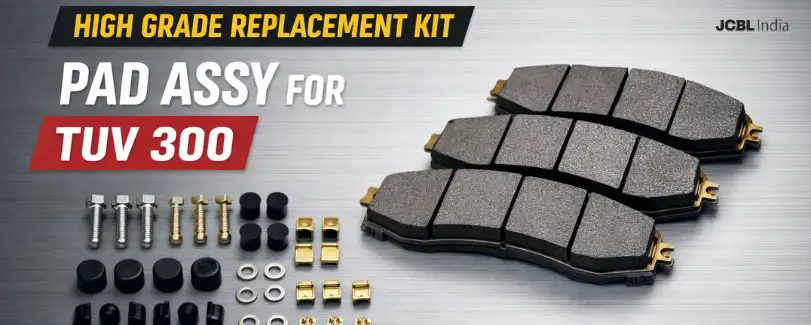
A Kit Pad Assy for the Mahindra TUV 300 is a front disc brake pad assembly (Reference No. 0603BAA0005KT/0603BAB02850N) designed to create friction against the brake rotor, allowing the vehicle to slow down or stop safely when the brake pedal is applied.
These replacement brake pad kits are engineered to match OEM specifications for fitment, friction performance, and structural strength, ensuring reliable braking performance in everyday driving conditions. By maintaining proper contact between the brake pads and rotor, the Kit Pad Assy plays a critical role in vehicle safety and braking efficiency.
In the automotive aftermarket, replacement brake components that meet OEM specifications help workshops and distributors maintain consistent vehicle performance while supporting efficient installation and maintenance.
What Is a Kit Pad Assy in a Mahindra TUV 300?
A Kit Pad Assy (Brake Pad Assembly) is a key component of the front disc braking system in the Mahindra TUV 300. It consists of friction pads mounted on steel backing plates that press against the rotating brake disc when braking force is applied.
When the driver presses the brake pedal:
- Hydraulic pressure is generated by the master cylinder.
- The pressure moves through the brake fluid lines to the brake caliper.
- The caliper piston pushes the brake pads against the rotating brake disc.
- Friction between the pads and disc slows down the wheel rotation.
This controlled friction converts kinetic energy into heat, allowing the vehicle to slow down smoothly.
Brake Pad Assembly Location in the TUV 300 Braking System
In the Mahindra TUV 300, the Kit Pad Assy is installed inside the front brake caliper. It works together with several other braking components to ensure effective stopping power.
Key components in the front braking system include:
- Brake disc (rotor)
- Brake caliper
- Brake pads
- Hydraulic brake lines
- Brake master cylinder
When the driver presses the brake pedal:
- Hydraulic pressure is generated by the master cylinder.
- This pressure travels through brake fluid lines to the caliper.
- The caliper piston pushes the brake pads against the rotating disc.
- Friction slows down the wheel rotation and stops the vehicle.
Because the brake pads directly interact with the rotating disc, they are considered wear components and require periodic inspection and replacement.
Why Brake Pad Quality Matters in Mahindra TUV 300
The Mahindra TUV 300 is widely used for passenger transport, personal mobility, and commercial utility applications. In many cases, these vehicles operate in conditions that place constant stress on the braking system.
Typical driving conditions include:
- Stop-and-go city driving
- Semi-urban and rural road conditions
- Passenger load variations
- Dust-heavy environments
- Frequent braking cycles
Under such conditions, brake pads experience continuous friction, heat buildup, and mechanical pressure.
Low-quality brake pads can lead to several operational issues, including:
- Squealing or noisy braking
- Brake fade during repeated use
- Uneven rotor wear
- Increased brake dust
- Reduced braking efficiency
Using OEM-spec replacement brake pads helps maintain predictable braking performance while protecting other braking components, such as the brake disc.
OEM Cross-Reference & Vehicle Compatibility
Accurate part mapping is important for distributors, garages, and spare-parts procurement teams. Proper cross-referencing ensures correct fitment and prevents inventory errors.
| Specification | Details |
| Vehicle Application | Mahindra TUV 300 |
| Reference No. | 0603BAA0005KT/0603BAB02850N |
| Replacement Part No. | JCMH-1455/JCMH-1456 |
| Component Type | Front Brake Pad Kit Assembly |
Clear cross-referencing allows workshops and distributors to identify compatible parts quickly, improving installation accuracy and inventory management.
Technical Parameters That Define OEM-Spec Brake Pad Kits
High-quality replacement brake pads are engineered to meet certain performance and durability parameters that align with OEM specifications.
- Friction Material Composition: Modern brake pads typically use non-asbestos friction compounds designed to deliver consistent braking performance while producing minimal dust. These materials provide balanced friction without excessive rotor wear.
- Stable Friction Performance: A stable friction level ensures that the braking response remains predictable and consistent, even during repeated braking cycles. This stability is important for maintaining safe stopping distances.
- Heat & Fade Resistance: During heavy braking or long downhill driving, brake pads can generate significant heat. High-grade pads are designed to maintain braking efficiency even under elevated temperatures.
- Noise and Vibration Control: Quality brake pad kits often incorporate noise-reducing shims or damping layers to minimize vibrations and prevent brake squeal.
- Structural Backing Plate Strength: The steel backing plate provides structural support to the friction material. High-strength plates help maintain proper alignment and durability during prolonged braking cycles.
- Rotor Compatibility: Well-engineered brake pads ensure even contact with the brake rotor, preventing uneven wear patterns and protecting the disc surface.
These technical factors collectively contribute to stable braking performance and longer service life.
OEM-Spec Replacement Pads vs Low-Quality Brake Pads
| Parameter | OEM-Spec Replacement Pads | Low-Quality Pads | Safety Impact |
| Friction Stability | Consistent braking response | Fluctuating friction | Unpredictable stopping distance |
| Heat Resistance | Fade-resistant | Rapid heat breakdown | Reduced braking efficiency |
| Noise Control | Low noise operation | Frequent squeal | Driver discomfort |
| Rotor Wear | Even and controlled wear | Rotor scoring | Higher maintenance cost |
| Service Life | Longer lifespan | Early wear | Frequent replacement |
Although low-cost pads may appear economical initially, they often result in higher maintenance costs and reduced braking reliability over time.
Signs That Brake Pads Need Replacement
Brake pads are designed to wear gradually during normal driving. Recognizing early warning signs helps maintain safe vehicle operation.
Common indicators that brake pads may need replacement include:
- Squealing or grinding noise during braking
- Reduced braking responsiveness
- Vibrations felt in the brake pedal
- Visible thinning of the brake pads
- Increased stopping distance
Regular inspection during routine servicing helps identify worn pads before they begin affecting braking performance.
Why Batch Consistency Matters in Bulk Procurement
For importers, distributors, and fleet operators, batch consistency is an important factor in spare parts procurement.
Uniform quality across shipments ensures:
- Identical friction characteristics
- Consistent installation results
- Reduced product returns
- Predictable braking performance across vehicles
- Lower warranty claims
Suppliers such as JCBL India provide OEM-spec replacement brake pad kits designed to align with structured aftermarket procurement cycles, supporting organized distribution and reliable fleet maintenance.
Why Importers Source Automotive Brake Components from India
India has become a major global hub for automotive replacement components, particularly for braking systems.
Several factors contribute to this reputation:
- Well-established automotive component clusters
- Advanced friction material expertise
- Export-oriented production facilities
- Competitive manufacturing infrastructure
- Compliance with international quality systems
Because of these advantages, distributors in Africa, the Middle East, Southeast Asia, and other emerging markets frequently source automotive braking components from India.
Why Choose JCBL India for Kit Pad Assy?
For distributors, fleet operators, and spare parts procurement teams, selecting the right replacement brake components requires a balance between quality, consistency, accurate fitment, and supply reliability.
JCBL India provides OEM-spec replacement Kit Pad Assy components designed to match the functional requirements of the Mahindra TUV 300 braking system, helping workshops and distributors maintain reliable braking performance across vehicles.
The company operates as part of the JCBL Group, an established Indian automotive engineering group known for its long-standing presence in the commercial vehicle and automotive component industry. This association strengthens product credibility and supports structured aftermarket supply for global buyers.
Key advantages include:
- OEM-Spec Replacement Design: The replacement brake pad kits are engineered to align with OEM dimensional and performance specifications, ensuring proper fitment within the TUV 300 braking system without installation complications.
- Accurate Part Cross-Referencing: Each kit is mapped with clear OEM reference numbers such as 0603BAA0005KT and 0603BAB02850N, helping distributors and service workshops easily identify compatible parts.
- Consistent Product Quality: Structured quality control processes help maintain uniform friction characteristics and dimensional consistency across batches, which is essential for importers and distributors sourcing in bulk.
- Organized Bulk Packaging: Clear labeling and structured packaging support efficient warehouse operations and easier product identification for distributors and retailers.
- Backed by the Automotive Expertise of the JCBL Group: Being part of the JCBL Group, which has 35+ years of experience in automotive engineering and vehicle solutions, adds layer of credibility and industry understanding to the replacement spare parts business.
- Aftermarket-Focused Supply Support: By offering OEM-spec replacement spare parts rather than original vehicle components, JCBL India supports the global automotive aftermarket with products designed for reliable fitment and practical servicing needs.
For importers and distributors managing spare parts supply chains, working with structured replacement component providers helps ensure predictable product performance, smoother installation processes, and better inventory control.
How to Source Replacement Brake Pad Kits for TUV 300
When sourcing replacement brake pad kits for distribution or fleet maintenance, buyers should follow a structured procurement process.
Important considerations include:
- Verify OEM cross-reference numbers
- Confirm friction material specifications
- Review production certifications (such as ISO quality systems)
- Ensure clear labeling and organized packaging
- Request documentation for batch consistency
Following these steps helps buyers ensure reliable product quality and smooth supply chain operations.
Conclusion
Brake pads play a critical role in maintaining safe and reliable vehicle operation. In vehicles such as the Mahindra TUV 300, which often operate under demanding driving conditions, using high-quality replacement brake pad kits engineered to OEM specifications helps ensure stable braking performance and predictable durability.
For distributors, fleet operators, and service workshops, sourcing structured replacement components with accurate cross-referencing supports efficient inventory management and reliable vehicle servicing.
High-grade replacement Kit Pad Assy components for the TUV 300 help maintain braking efficiency, reduce maintenance issues, and support consistent performance across vehicles.
FAQs
- What is a Kit Pad Assy in a Mahindra TUV 300?
A Kit Pad Assy is a front brake pad set used in the disc braking system of the Mahindra TUV 300. It creates friction against the brake disc to slow or stop the vehicle. - How long do TUV 300 brake pads typically last?
Brake pad lifespan generally ranges between 30,000 to 50,000 km, depending on driving conditions, terrain, and braking habits. - Can replacement brake pads match OEM performance?
Yes. Replacement brake pads engineered to OEM specifications can provide comparable fitment, braking response, and durability when installed correctly. - What causes brake pad noise during braking?
Brake noise can occur due to worn pads, uneven rotor surfaces, excessive dust buildup, or poor-quality friction materials. - How do distributors verify brake pad compatibility?
Distributors typically verify compatibility by checking OEM reference numbers, vehicle application details, and cross-reference part numbers. - Why is OEM cross-reference important when sourcing spare parts?
OEM cross-referencing helps ensure correct fitment, prevents inventory mistakes, and supports efficient spare-parts management for workshops and distributors.