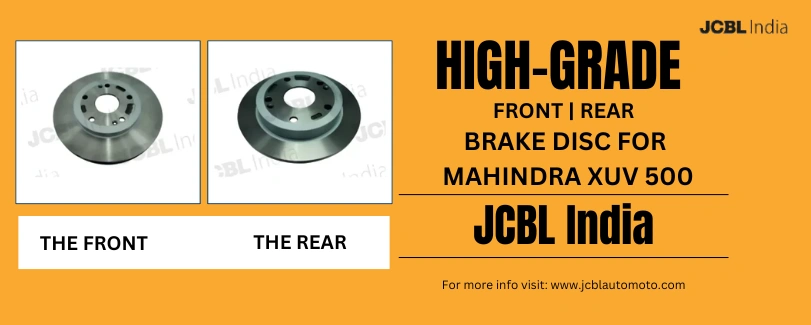
High-Grade Brake Disc (Front & Rear) for Mahindra XUV 500—JCBL India
A brake disc (front and rear) for the Mahindra XUV 500 is a rotating component in the disc braking system that works with brake pads to generate friction, enabling controlled deceleration and safe stopping.
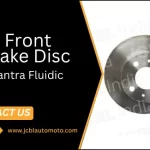
The front (OEM: 0603AAB00330N) and rear (OEM: 0604AAB00080N) brake discs are engineered to meet OEM specifications for dimensional accuracy, thermal stability, and wear resistance. These discs are designed to maintain consistent braking performance across varied driving conditions, including city traffic, highway speeds, and load-bearing usage.
For automotive aftermarket distributors and service workshops, OEM-spec replacement brake discs support reliable fitment, predictable performance, and efficient maintenance operations.
What Is a Brake Disc in Mahindra XUV 500?
A brake disc (also known as a rotor) is a circular metal component attached to the wheel hub. It rotates with the wheel and interacts with brake pads to create friction during braking.
Quick Explanation:
- Brake discs rotate with the wheel
- Brake pads press against the disc when braking
- Friction slows down the vehicle
- Heat is generated and dissipated through the disc
This process converts kinetic energy into heat, allowing smooth and controlled stopping.
How the Brake Disc Works (Step-by-Step)
When the driver applies the brakes:
- The brake pedal activates the master cylinder
- Hydraulic pressure is generated
- Brake fluid transfers pressure to the caliper
- The caliper presses brake pads against the rotating disc
- Friction reduces wheel speed and stops the vehicle
Consistent friction and heat management are critical to maintaining braking efficiency and safety.
Brake Disc Placement in XUV 500
The Mahindra XUV 500 uses disc brakes on both front and rear wheels, each contributing differently to braking performance.
Front Brake Discs
- Handle ~70% of braking force
- Provide primary stopping power
- Critical for emergency braking
Rear Brake Discs
- Maintain vehicle balance and stability
- Support controlled deceleration
- Reduce load on the front braking system
This balanced system ensures safer braking under different driving conditions.
Why Brake Disc Quality Matters in XUV 500
Vehicles like the Mahindra XUV 500 often operate under demanding conditions, requiring durable and heat-resistant braking components.
Common usage conditions:
- High-speed highway driving
- Urban stop-and-go traffic
- Heavy passenger or cargo load
- Long-distance travel
- Sudden braking scenarios
Risks of low-quality brake discs:
- Brake fade due to overheating
- Vibration or brake judder
- Uneven wear patterns
- Reduced braking efficiency
- Increased maintenance frequency
OEM-spec brake discs help ensure stable performance, reduced wear, and predictable braking response.
OEM Cross-Reference & Compatibility
Accurate part identification is essential for distributors and workshops to ensure correct fitment and avoid inventory mismatches.
| Specification | Front Brake Disc | Rear Brake Disc |
| Vehicle | Mahindra XUV 500 | Mahindra XUV 500 |
| OEM Part No. | 0603AAB00330N | 0604AAB00080N |
| Replacement Ref. | JCMH-1342 | JCMH-1343 |
| Placement | Front | Rear |
| Component Type | Brake Disc (Rotor) | Brake Disc (Rotor) |
Clear cross-referencing improves procurement accuracy and reduces installation errors.
Technical Parameters That Define OEM-Spec Brake Discs
High-quality brake discs are defined by specific engineering and material standards:
- Material Composition: Typically made from high-grade cast iron or alloy materials to ensure strength and durability.
- Thermal Stability: Designed to withstand high temperatures without losing braking efficiency.
- Heat Dissipation Efficiency: Prevents overheating and reduces brake fade during repeated braking.
- Precision Machining: Ensures smooth surface finish for uniform pad contact and consistent friction.
- Vibration Control (Balancing): Precision-balanced discs reduce vibrations and improve driving comfort.
- Wear Resistance: Engineered for even wear, extending service life and reducing replacement frequency.
These parameters directly impact braking reliability and safety.
OEM-Spec vs Low-Quality Brake Discs
| Parameter | OEM-Spec Discs | Low-Quality Discs | Impact |
| Heat Resistance | High | Low | Brake fade risk |
| Surface Finish | Precision machined | Uneven | Vibration |
| Durability | Long-lasting | Short lifespan | Frequent replacement |
| Performance | Consistent | Unstable | Safety risk |
| Wear Pattern | Even | Irregular | Higher maintenance |
While low-cost options may reduce upfront expense, they often increase long-term operational costs.
Signs That Brake Discs Need Replacement
Regular inspection is essential to maintain braking performance.
Common warning signs:
- Vibrations or pulsation during braking
- Visible grooves or scoring
- Reduced braking efficiency
- Noise during braking
- Disc overheating or discoloration
Early detection helps prevent further damage to braking components.
Why Batch Consistency Matters in Bulk Procurement
For importers, distributors, and fleet operators, batch consistency ensures operational reliability.
Key benefits:
- Uniform braking performance across vehicles
- Consistent installation results
- Reduced returns and complaints
- Lower warranty risks
- Predictable maintenance cycles
Structured suppliers with defined quality processes help maintain consistency across shipments.
Why India Is a Key Sourcing Hub for Brake Components
India has established itself as a global supplier of automotive braking components due to:
- Strong OEM and aftermarket ecosystem
- Advanced manufacturing capabilities
- Cost-effective production
- Export-focused infrastructure
- Compliance with international quality standards
These factors make India a preferred sourcing destination for distributors across global markets.
How to Source Brake Discs for XUV 500
A structured sourcing process helps ensure quality and compatibility:
- Verify OEM part numbers and cross-references
- Check material and manufacturing specifications
- Review certifications (e.g., ISO standards)
- Evaluate supplier quality control processes
- Ensure proper packaging and labeling
- Confirm batch consistency
Following these steps improves procurement efficiency and reduces supply chain risks.
Product Overview: Front & Rear Brake Discs
Replacement brake discs designed for the Mahindra XUV 500 are engineered to deliver the following:
- Consistent braking efficiency
- High heat and wear resistance
- Smooth and fade-resistant performance
- Precision fit for front and rear applications
- Minimal vibration through balanced design
Such components are typically supplied by established aftermarket manufacturers and suppliers, including companies like JCBL India Auto Moto, which operate within structured automotive engineering ecosystems and support global distribution requirements.
Conclusion
Brake discs are a critical component in ensuring safe and efficient braking performance in the Mahindra XUV 500. Given the vehicle’s varied usage conditions, using OEM-spec replacement brake discs helps maintain consistent braking response, reduce wear, and improve overall vehicle safety.
For distributors, workshops, and fleet operators, sourcing high-quality brake discs with accurate cross-referencing and batch consistency supports reliable vehicle maintenance and efficient inventory management.
Well-engineered front and rear brake discs contribute to stable braking performance, lower maintenance costs, and long-term operational reliability.
FAQs
What is the function of a brake disc in Mahindra XUV 500?
A brake disc works with brake pads to create friction, helping the vehicle slow down or stop safely during braking.
What is the difference between front and rear brake discs?
Front brake discs handle most of the braking force, while rear discs provide balance and stability during braking.
How long do brake discs last in XUV 500?
Brake discs typically last between 60,000 to 100,000 km, depending on driving conditions and usage patterns.
What are the signs of damaged brake discs?
Common signs include vibration during braking, noise, visible grooves, overheating, and reduced braking efficiency.
Why is OEM cross-referencing important when sourcing brake discs?
OEM cross-referencing ensures correct fitment, reduces inventory errors, and supports efficient procurement for distributors and workshops.