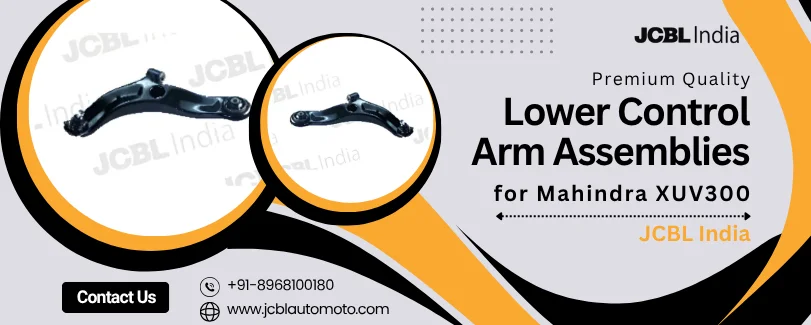
Premium Quality Lower Control Arm Assemblies for Mahindra XUV300
Vehicle suspension systems play a critical role in maintaining steering stability, wheel alignment, ride comfort, and overall driving control. Among the key suspension components, lower control arms help connect the vehicle chassis to the wheel assembly while supporting smooth suspension movement and precise steering response.
The Arm Assy Lower Control LH and Arm Assy Lower Control RH for the Mahindra XUV300 are genuine-quality replacement components designed to support suspension performance, wheel alignment accuracy, and vehicle stability. Manufactured to meet vehicle-specific fitment and performance requirements, these components help ensure reliable operation under varying road conditions.
For distributors, workshops, fleet operators, and automotive importers, sourcing high-quality suspension components is essential for maintaining vehicle safety, reducing maintenance issues, and improving long-term operational reliability.
What Is a Lower Control Arm Assembly?
A lower control arm is a critical suspension component that connects the wheel hub assembly to the vehicle frame or subframe. It helps control wheel movement while maintaining proper suspension geometry and alignment.
The lower control arm performs several important functions:
- Maintains wheel alignment
- Supports steering precision
- Absorbs road shocks and vibrations
- Assists suspension articulation
- Improves vehicle stability during cornering and braking
- Helps ensure consistent tire contact with the road surface
Because lower control arms experience continuous load, vibration, and road impacts, durability and dimensional accuracy are essential for reliable performance.
How Lower Control Arms Support Suspension and Steering Performance
Lower control arms work together with bushings, ball joints, shock absorbers, and other suspension components to maintain vehicle control.
Operational Process
- The control arm connects the wheel assembly to the vehicle chassis.
- Suspension movement allows the wheel to travel vertically over uneven road surfaces.
- The control arm helps maintain proper wheel positioning during vehicle operation.
- Suspension geometry remains controlled during acceleration, braking, and cornering.
- Steering response and wheel alignment remain consistent under varying driving conditions.
Properly functioning control arms contribute to improved ride comfort, stable handling, and predictable steering performance.
Why Lower Control Arm Quality Matters
Suspension components operate under continuous mechanical stress and environmental exposure.
Common operating conditions include:
- Road vibrations
- Potholes and rough terrain
- Heavy braking forces
- Cornering loads
- Water exposure
- Dust and debris
- Temperature fluctuations
Poor-quality suspension components may lead to:
- Premature wear
- Steering instability
- Wheel alignment problems
- Excessive tire wear
- Increased suspension noise
- Reduced ride comfort
High-quality control arms manufactured to OEM-specification standards help support long-term suspension performance and vehicle reliability.
OEM Cross-Reference and Vehicle Compatibility
Correct part identification is important for ensuring proper fitment and reducing installation errors.
| Component | Vehicle | OEM Part Number | Reference Number |
| Arm Assy Lower Control LH | Mahindra XUV300 | 0401BBC00570N | JCMH-1407 |
| Arm Assy Lower Control RH | Mahindra XUV300 | 0401BBC00580N | JCMH-1406 |
Verifying OEM references before purchasing replacement suspension components helps ensure compatibility and supports efficient maintenance planning.
Engineering Parameters of High-Quality Lower Control Arms
The performance and durability of suspension components depend on several engineering factors.
- Material Strength: High-strength materials help withstand operational loads, impacts, and suspension stress over extended periods.
- Dimensional Accuracy: Vehicle-specific dimensional tolerances help support proper fitment and installation consistency.
- Bushing Performance: Quality bushings help reduce vibration transfer while improving ride comfort and suspension movement.
- Corrosion Resistance: Protective surface treatments help resist moisture, road contaminants, and environmental exposure.
- Impact Durability: Control arms are designed to withstand repeated road impacts and suspension loads.
- Suspension Geometry Control: Accurate manufacturing helps maintain proper suspension geometry for improved steering and alignment stability.
Genuine Quality Control Arms vs Low-Grade Alternatives
| Parameter | genuine quality Components | Low-Grade Alternatives |
| Fitment Accuracy | Vehicle-specific | May vary |
| Material Quality | Consistent | Often inconsistent |
| Alignment Stability | Reliable | Reduced accuracy |
| Corrosion Resistance | Enhanced protection | Limited protection |
| Durability | Improved service life | Higher wear risk |
| Ride Quality | Consistent performance | Variable performance |
Selecting quality suspension components helps improve vehicle reliability while reducing maintenance-related issues.
Common Signs of Lower Control Arm Wear
Routine inspection can help identify suspension issues before they affect vehicle handling and safety.
Common symptoms include:
- Uneven tire wear
- Vehicle pulling to one side
- Steering wheel vibration
- Clunking or knocking noises
- Poor steering response
- Reduced ride comfort
- Wheel alignment issues
Replacing worn suspension components promptly can help maintain proper vehicle control and driving stability.
Importance of Consistent Quality in Suspension Components
For distributors, workshops, fleet operators, and automotive importers, consistent product quality is essential.
Benefits include:
- Predictable fitment
- Reduced installation adjustments
- Improved inventory management
- Lower warranty concerns
- Consistent vehicle performance
- Better maintenance efficiency
Reliable manufacturing and quality control processes help support consistent replacement solutions across production batches.
Why Choose JCBL India for Suspension Components?
Selecting the right supplier is important for ensuring product consistency, fitment accuracy, and supply reliability.
JCBL India supplies genuine quality suspension components designed to meet vehicle-specific fitment and performance requirements while supporting the needs of distributors, workshops, fleet operators, and international importers.
Key advantages include the following:
- genuine quality quality
- Vehicle-specific fitment standards
- Consistent manufacturing processes
- Comprehensive automotive replacement parts portfolio
- Export-focused supply capabilities
- Reliable replacement solutions
- Efficient logistics and supply chain support
These capabilities help businesses source dependable suspension components for domestic and international applications.
Sourcing Lower Control Arms for Mahindra XUV300
When selecting replacement control arms, buyers should consider:
- OEM part number verification
- Vehicle compatibility confirmation
- Material quality standards
- Bushing performance
- Corrosion protection
- Dimensional accuracy
- Manufacturing consistency
- Quality inspection procedures
- Packaging and labeling standards
Suppliers that maintain consistent quality standards can help reduce procurement risks while supporting long-term vehicle performance.
Conclusion
Lower control arms are essential suspension components that help maintain wheel alignment, steering precision, ride comfort, and vehicle stability in Mahindra XUV300 vehicles.
Using genuine quality replacement control arms with accurate fitment, durable construction, and reliable performance characteristics helps support long-term suspension reliability and maintenance efficiency. For distributors, workshops, fleet operators, and importers, sourcing high-quality replacement suspension components can contribute to improved vehicle performance and reduced operational downtime.
FAQs
What does a lower control arm do in a Mahindra XUV300?
A lower control arm connects the suspension system to the vehicle chassis and helps maintain wheel alignment, steering stability, and controlled suspension movement.
How do I know if a lower control arm needs replacement?
Common signs include uneven tire wear, steering vibration, suspension noise, poor handling, and wheel alignment problems.
Why does a worn control arm affect wheel alignment?
A damaged or worn control arm can alter suspension geometry, causing improper wheel positioning and alignment issues.
Why should OEM part numbers be verified before purchasing a replacement control arm?
OEM references help confirm vehicle compatibility and reduce the risk of installation or fitment errors.
What are genuine quality control arms?
Genuine quality control arms are replacement components manufactured to meet dimensional, fitment, and performance standards comparable to the original vehicle application.